
What Is A Taxable Fringe Benefit? Payroll Risks to Beware

Article Summary: A taxable fringe benefit is one that must be counted as income in an employee’s tax return. While most fringe benefits are exempt, some aren’t, especially for shareholders who own more than 2% of the company. Read the full article to learn more.
Even without tax regulations, payroll is complicated. That’s why 65% of small business owners say they’d prefer to outsource it.
But there’s another threat that can make payroll even more challenging—and you might not be aware of it:
Fringe benefits.
Those bonus perks you offer employees (and rightfully take advantage of yourself) just might get you in trouble, especially if you have an S corporation.
Related Reading: Which Business Structure Is Right For You?
Don’t leave taxes to chance. The IRS has serious penalties for payroll tax issues.
Continue reading to learn more.
What Are Fringe Benefits?
Before we get much further, let’s review: What are fringe benefits?
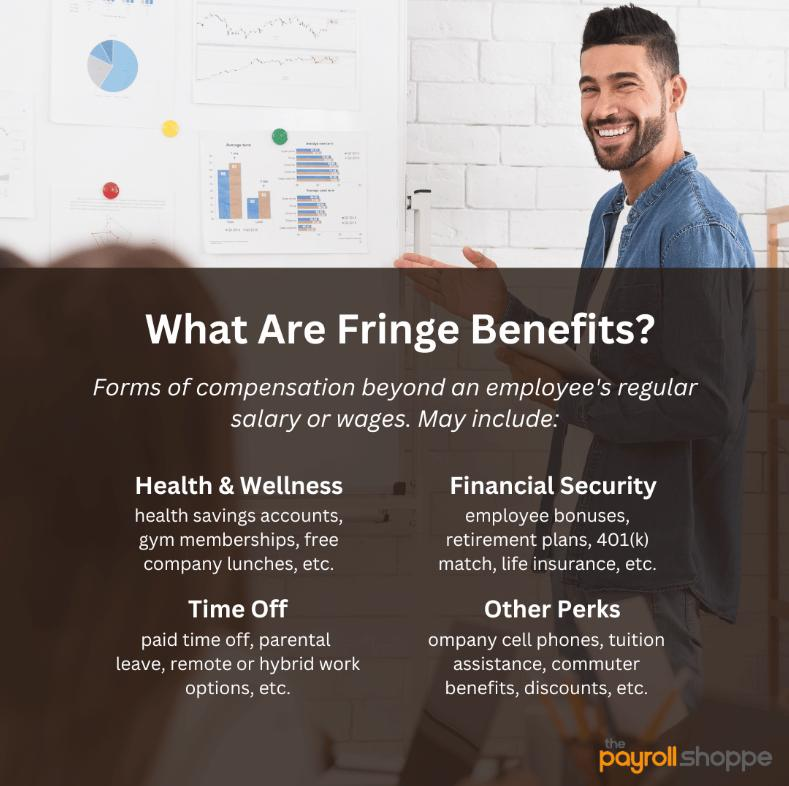
Fringe benefits are forms of compensation employers provide beyond an employee’s regular salary or wages. The most familiar forms include health insurance, retirement contributions, company vehicles, educational assistance, and other perks.
In a broader sense, fringe benefits often fall into a few different categories, including:
- Health & Wellness – This category can include benefits like health savings accounts (HSA), gym memberships, and free company lunches.
- Financial Security – This may include employee bonuses, retirement plans, 401(k) match, life insurance, and company stock options.
- Time Off – This category often includes paid time off, parental leave, and remote or hybrid work options.
- Other Perks – This one commonly includes company cell phones, tuition assistance, commuter benefits, employee discounts, country club access, tickets to sporting events, and more.
As a business owner, you likely take advantage of many of these benefits—and you’re justified in doing so.
But as we’ll explore later on, you may need to pay taxes on those benefits.
What Is A Taxable Fringe Benefit?
A taxable fringe benefit is an employer-provided benefit whose value must be recorded as taxable compensation. Depending on the applicable rules, this benefit may be subject to:
- federal income tax
- Social Security
- Medicare
- other employment taxes
Many fringe benefits qualify for tax exclusions under IRS rules. However, others are taxable, depending on:
- the benefit itself
- the value of the benefit
- how the benefit is provided
- whether the employee qualifies for an exemption
We explain more below!
When Are Fringe Benefits Not Taxable?
Under IRS Publication 15-B, the IRS allows certain benefits to remain tax-free under specific circumstances, and those generally include:
- Accident and health benefits
- Achievement awards
- Adoption assistance
- Athletic facilities
- De minimis benefits
- Employee discounts
- Employer-provided cell phones
- HSAs
- Lodging on business premises
- Retirement planning services
However, these exclusions aren’t automatic. For example, an on-site company gym may qualify for an exclusion while an ordinary gym membership may be taxable.
Note: Always consult with your CPA for guidance specific to your company.
Fringe Benefits and the 2% Shareholder Rule
Here’s where things get especially complicated for small businesses and their owners: The 2% shareholder rule for S corps.
This IRS regulation requires any shareholder who owns more than 2% of the company’s stock or voting power to be treated as a partner for certain fringe benefits, including:
1. Health Insurance
Important rules to note:
- The company can deduct the health insurance premiums paid on behalf of the shareholder.
- The cost of the insurance must be included as wages in Box 1 of the shareholder’s W-2. Note: These wages are exempt from Social Security, Medicare, and federal unemployment.
- These rules apply when premiums are paid under a qualifying plan or system covering all employees or a class of employees.
- Shareholders may be eligible to deduct qualifying health insurance premiums on their personal income tax returns.
2. Disability
In general, shareholders may not exclude employer-provided short- and long-term disability insurance premiums. These premiums should be taxed as income for applicable owners.
However, disability insurance is complicated because the tax treatment of the premiums and the tax treatment of eventual disability payments are two different questions.
Example: Whether premiums are paid with pretax or after-tax funds can affect whether future disability benefits are taxable.
Always consult with your CPA for annual tax rules and updates.
3. Commuting
Shareholders who own more than 2% of an S corporation generally cannot exclude qualified transportation benefits, including employer-provided transit passes and parking, under the ordinary employee rules.
Company vehicles have separate tax rules, which may require the value of personal use to be reported as taxable compensation
4. Group-Term Life Insurance
For most employees, the first $50,000 of employer-provided group-term life insurance coverage is tax-free.
But that exclusion doesn’t apply to S corporation shareholders who own more than 2% of the business.
Instead, the cost of their employer-provided group-term life insurance coverage must generally be included as taxable compensation on their W-2, regardless of whether the coverage exceeds $50,000.
These benefits may also be subject to Social Security and Medicare taxes, creating additional payroll obligations.
5. Section 125 Cafeteria Plans
Section 125 cafeteria plans allow employees to pay for certain benefits—like health insurance premiums—using pretax dollars.
But there are different rules for shareholders who own more than 2% of an S corporation: They’re generally ineligible to participate in these plans on a pretax basis.
That means they can’t automatically receive the same tax advantages as regular employees, even when they’re enrolled in the same health insurance plan.
Business owners need to make sure these contributions are handled correctly through payroll to avoid incorrect tax withholding and W-2 reporting.
How to Report Fringe Benefits On A W-2
Identifying taxable fringe benefits is only half the battle. You also need to make sure they’re accurately reflected in your payroll records and W-2 forms.
Depending on the benefit and applicable tax rules, reporting may include:
- Box 1: Taxable compensation subject to federal income tax.
- Box 3: Compensation subject to Social Security taxes.
- Box 5: Compensation subject to Medicare taxes.
- Box 12: Certain benefits that require special reporting, such as taxable group-term life insurance.
- Box 14: Additional information about certain benefits, when appropriate.
Remember: Not every taxable fringe benefit is subject to the same taxes. That’s why you should never wait until the last minute for withholding obligations or payroll corrections ahead of tax season.
Instead, keep detailed records of the benefits you provide, understand which taxes apply, and make sure everything is correctly reflected in payroll before issuing W-2s.
Find Ongoing Support With Payroll and Fringe Benefits
Don’t make mistakes with payroll taxes and fringe benefits.
We can help.
Contact us for year-round support on fringe benefits, payroll management, and much, much more.
Our team is standing by and ready to help!
Frequently Asked Questions
What Are Some Examples of Taxable Fringe Benefits?
Common examples include personal use of a company vehicle, gym memberships, cash bonuses, certain employee gifts, and tickets to sporting events.
However, not every fringe benefit is automatically taxable. The IRS provides exclusions for certain benefits, depending on their value, purpose, and how they’re provided.
Are Fringe Benefits Considered Income?
Yes, taxable fringe benefits are considered part of an employee’s compensation, even when they aren’t paid in cash.
For example, if an employer provides a company vehicle that an employee uses for personal errands, the value of that personal use may need to be reported as taxable income.
Do Employers Have to Pay Payroll Taxes on Fringe Benefits?
In many cases, yes.
Taxable fringe benefits may be subject to federal income tax withholding, Social Security, Medicare, and unemployment taxes. However, different rules apply to different benefits.
That’s why it’s important to correctly categorize each benefit before processing payroll.
Are Fringe Benefits Taxable for S Corporation Owners?
Some benefits are taxable for S corporation owners, even when those same benefits would be tax-free for ordinary employees.
Shareholders who own more than 2% of an S corporation are subject to special IRS rules affecting health insurance, HSAs, group-term life insurance, and other benefits.
These shareholders are treated similarly to partners for certain fringe benefit tax purposes, creating additional payroll reporting requirements.